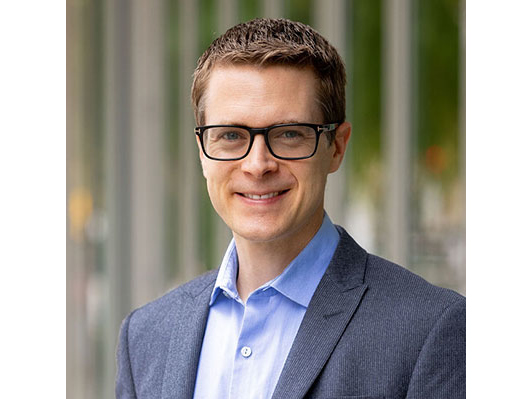
Jon Stefely
Department of Biomolecular Chemistry
Assistant Professor
Discovery Building Room 2268
Education
B.S., Chemistry, University of Notre Dame Ph.D., Biochemistry, UW–Madison M.D., UW–Madison Post-Doc, Massachusetts General Hospital
Research Areas
- Microbial Biophysics & Virology
- Origins and Early Evolution of Life
- Spectroscopy, Microscopy, Imaging
- Structural Biology
- Synthetic & Systems Biology
Biochemistry and metabolism of infectious amoeba
Our laboratory focuses on comparative metabolism from pathogenic amoeba to humans.
The high-level question driving our work is: how does our human metabolism differ from that of distant eukaryotic relatives such as pathogenic amoeba?
Our core scientific thesis is that a systematic characterization of the unique metabolism of pathogenic amoeba that is not conserved in humans will lead to the discovery of both new fundamental biology and novel drug targets.
Amoeba are ancient single-cell eukaryotic organisms found across the globe in diverse environmental niches. Amoeba can be considered evolutionary cousins to humans, sharing some biochemical pathways, but diverging in many interesting ways – which we aim to systematically delineate. Some amoeba are human pathogens that can cause infectious blindness or fatal brain infections. Unfortunately, diagnosing amoeba infections is challenging, and current treatment options are often ineffective. The divergent biochemical features of amoeba can offer opportunities for creative new diagnostic or therapeutic targets. However, most of this unique amoeba biochemistry remains uncharacterized.
To systematically discover unique features of amoeba biology and biochemistry – with a particular focus on metabolism – our scientific approach integrates large-scale multi-omics, high-throughput microscopy, and computation with mechanistic biochemistry, organelle physiology, and cell biology.