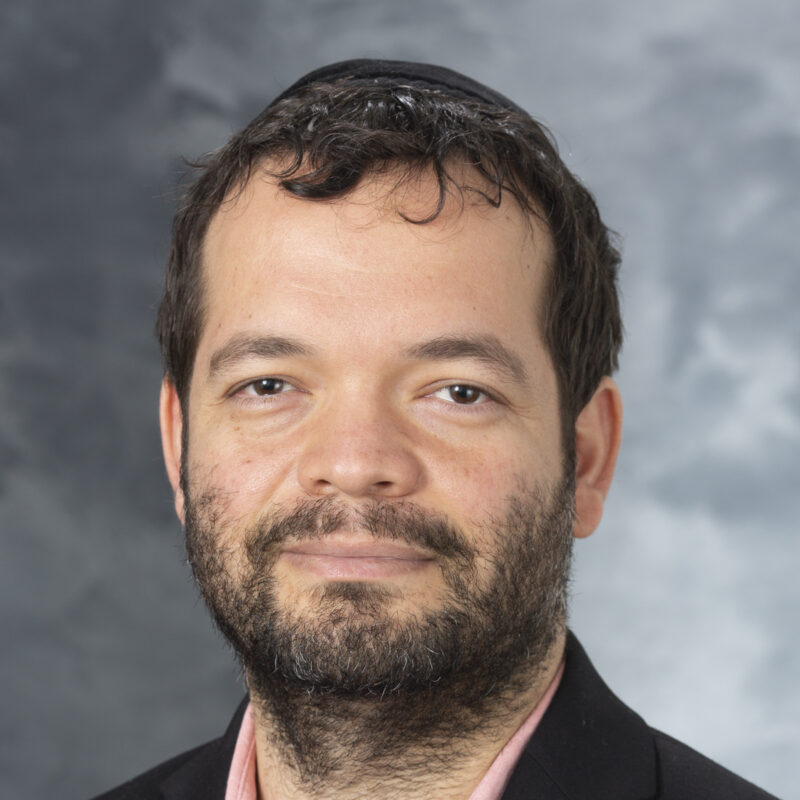
Alexander Birbrair
Department of Dermatology
Assistant Professor
Medical Sciences Center, Rm 4385
1300 University Avenue
Madison, WI 53706
Education
Bachelor of Science (B.Sc.), Biomedical Sciences, State University of Santa Cruz, Brazil
Ph.D., Neuroscience, Wake Forest University, NC
Postdoc, Cancer and Stem Cell Biology, Albert Einstein College of Medicine, NY
Research Areas
- Biotechnology
- Membrane and Cellular Biophysics
- Neuroscience
- Personalized Medicine
Cancer Neuroscience
Overview The Birbrair Laboratory investigates the complex cellular architecture and functional dynamics of stem cell niches in skin, neural, and tumor microenvironments. Our research bridges cellular biology, advanced optical physics, and quantitative computational analysis.

Opportunities for Graduate Student Training
We offer graduate students in the Biophysics Program a rich, interdisciplinary environment centered on:
- Advanced Optical Microscopy & Deep-Tissue Imaging: We utilize multiphoton microscopy, high-resolution confocal imaging, intravital live-cell imaging, and optical tissue clearing techniques to quantify cellular dynamics in intact tissues in real time.
- Cellular & Membrane Biophysics: We study physical cell-cell and cell-matrix interactions, specifically evaluating how biomechanical forces, membrane dynamics, and microenvironmental stiffness influence pericyte function, stem cell fate, and vascular remodeling.
- Quantitative & High-Throughput Spatial Biology: Trainees gain rigorous training in high-throughput single-cell RNA sequencing (scRNA-seq), spatial transcriptomics, and computational image processing algorithms to extract quantitative spatial metrics from complex 3D tissue architectures.
By merging quantitative imaging, biophysical measurements of tissue microenvironments, and computational bioinformatics, our lab provides Biophysics students with the tools to solve fundamental biological questions using physical and quantitative principles.
Specific Projects Suitable for a Biophysics Student’s Thesis
Project 1: Biophysical mechanics of pericyte-endothelial interactions in microvascular stability during melanoma progression
- Objective: Quantify the physical and mechanical forces governing pericyte recruitment, vessel coverage, and membrane-membrane signaling during microvascular repair and tumor angiogenesis during melanoma progression.
- Methods: High-resolution live intravital multiphoton microscopy, fluorescence recovery after photobleaching (FRAP), atomic force microscopy/traction force measurements, and 3D quantitative image reconstruction.
Project 2: Quantitative spatial dynamics and computational modeling of stem cell niches
Methods: Spatial transcriptomics, deep-tissue optical clearing, high-throughput single-cell sequencing, and computational spatial modeling to correlate cellular physical proximity with functional gene expression profiles.
Objective: Map and model the biophysical microenvironment regulating stem cell dormancy, activation, and fate determination in skin and neural tissue models.