Marc Chevrette
Plant Pathology & Wisconsin Institute for Discovery
Assistant Professor
Russell Laboratories, 790B
Wisconsin Institute for Discovery, 2174
Education
PhD, Genetics, University of Wisconsin–Madison
MSc, Genetics, University of Wisconsin–Madison
ALM (MA), Biotechnology (Bioengineering), Harvard University Extension
BSc, Molecular Biology & Bioinformatics, Rensselaer Polytechnic Institute
Research Areas
- Biotechnology
- Computational Biology and AI
- Microbial Biophysics & Virology
- Synthetic & Systems Biology
Ecology and evolution of microbial secondary metabolism
Microbes are the best chemists in the world and their metabolites are the language of microbial interactions. Microbially produced secondary metabolites influence many aspects of microbiome ecology and are an important source of critical human medicines, including antibiotics, anticancer therapeutics, and immunosuppressants.
Our research focuses on the ecology and evolution of the genes that encode secondary metabolism and how microbial metabolites shape microbiome interaction networks. We deploy both computational and experimental approaches to describe the eco-evo dynamics of bacteria and the genes that assemble their secondary metabolites.
- What bacterial conversations are happening in host-associated microbiomes?
- What are the molecules that mediate these interactions?
- How do microbes assemble these molecules?
- How does community structure influence secondary metabolite-mediated interactions?
- How does the diversity and distribution of different biosynthetic pathways vary across hosts, geographies, or environmental contexts?
- Where should we look to find new antibiotics and other bioactive secondary metabolites?
- How can we best integrate genomic, transcriptomic, metabolomic, and other large data sets to uncover the underlying principles of interspecies interactions in microbiomes?
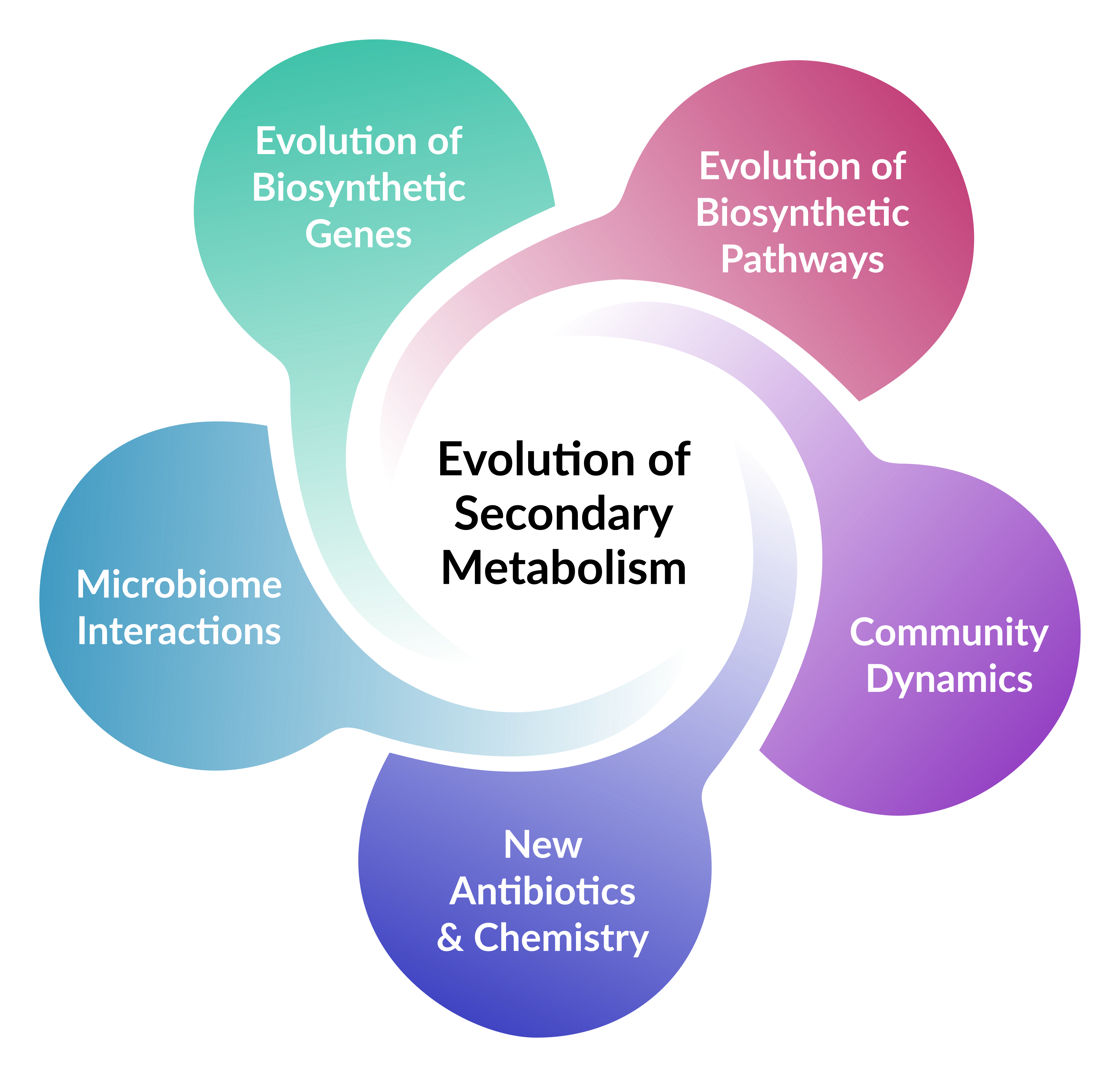
Our research aims to address these questions by connecting the evolution of biosynthetic gene clusters and their chemical products to their functional ecology. This is currently explored in two major research areas:
- reductionist, experimental systems to gain mechanistic insight
- naturally occurring, host-associated microbiomes